Page 1 of 3
Mechanics
The mechanics are the star. Each one started as a question, became a sketch, and (sometimes) found a game that proved it works. The games below are case studies — examples of the mechanic in the wild.
Playtested mechanics
Meeples as Weighted Dice
Roll your meeples like dice. How they land is what they do.
A meeple has three stable resting orientations: face down (~50% of random drops), on its side (~33%), and standing up (~17%). They act like weighted dice. Roll a fistful, spend actions to reroll or modify them in various ways, reveal, and resolve like a hidden-information dice game.
These weights are a perfect match for an intuitive battle resolution mechanic: face down meeples are considered first but one player must win them by 3, sideways meeples next but win by 2, and finally standing meeples win by 1. Expected value across the three orientations comes out roughly equal, so the game is balanced against the physics itself — standard off-the-shelf meeples are the perfect default to compete against, no custom die required. Ties result from 15-20% of battles, which is enough to add a sense of tension if you use it as an opportunity to increase the stakes.
To give the players some agency, let them take actions to either reroll one or more meeples or move one meeple into a specific pose. They do this behind a screen and reveal to give a balanced mini-game with a rock-paper-scissors feel but a much larger state space. This works at meeple counts from 3 up to 8 or more, and the number of meeples each player rolls, the number of meeples they choose for the battle resolution, and the number of actions they take can all be adjusted to give players advantages and disadvantages, and more or less control over the outcome. Decreasing meeple counts but increasing actions for the loser strikes a good balance between rewarding the winner and providing a catch-up possibility for the loser.
Emergent Map
The map exists in the rules. Whether to print it is up to you.
The map exists whether or not you show it to the player. Players use a pair of identical keycards to form 3-digit room numbers, and the placement constraints determine which numbers can be unlocked and which serve as obstacles to navigate around. The set of valid room numbers, and the adjacencies between them, is the map.
That gives the designer a knob players normally never see. You can print the map on each keycard for planning convenience, or you can hide it entirely and let the player deduce and draw it on a sheet of scratch paper as they go. You can do something in between — partial maps, fog-of-war reveals, in-game discoveries that surface a previously-hidden wing. The underlying geometry doesn’t change; only the player’s view of it does.
The full map that emerges from these two identical keycards has exactly the right level of complexity, almost by magic. Every room is reachable from every other room, but reaching one from another can take up to 13 moves. There are several “elevator shafts” that let you move between all four floors, but each floor has a different layout. The shortest path between the two most distant rooms requires visiting every “floor” and changing direction 7 times.
Variation across plays comes from alternate keycards rather than from shuffling. The map stays the same, but a different keycard discovered mid-game opens a wing of the hotel that the original keycards couldn’t reach — same building, rooms you couldn’t get to before.
Each Card Is Its Own Suit, with Dynamic Trump
Trick-taking, but every card is a different suit and the trumps shift mid-round.
We started from a question: what if a trick-taking game had 64 suits instead of 4? Each card is a unique combination of six binary traits. There are no static suits to follow and no high numbers to trump your opponents. Instead, the “trump” is a dynamic, puzzle-like filter sitting right on the table. Every unique combination of trait tiles imposes a different order across all of the cards in the deck.
It’s not just about what cards you’re dealt, but how cleverly you can alter reality to fit your hand. Players start by drafting the desired traits, and then take turns making changes to manipulate the trait tiles for the next hand. Each hand ends in a single winner for the trick, with no possibility of ties or need for a tiebreaker.
Novel Multi-Unit Auctions
A multi-item auction structure where you literally cannot overspend.
This auction mechanic was designed by PhDs for FCC spectrum auctions, and has never been used in a tabletop game. Bidders compete for quantities of identical items on a card, not single objects. When demand matches supply, every bidder gets what they bid for; when demand exceeds supply, some items are allocated fairly to the bidders and the price escalates for the remaining items in future auction rounds.
This mechanic allows bidding with two resources — e.g. bidding tokens to track the won items, and money to pay for each item. But it works particularly well when the bidding tokens are workers, and the “money” is a time track that counts upwards by the player’s cost. Players simultaneously blind-bid some number of their available workers; bid size is physically capped by the worker tokens you have on hand. You can never bid more than you can afford, because both meters are visible and bounded: bidding is committing workers and committing time-track movement, simultaneously. No counting, no change-making, no surprise bankruptcy. Foolproof for bidders.
The example game, River Bankers, matches this mechanic to a theme perfectly. The animal workers (beavers, otters, muskrats, minks) are represented by tokens that physically fetch the resources they bid on; “jams” model the demand-exceeds-supply case as a literal traffic jam in the river; and cards that don’t fully clear float downstream into a costlier slot — the geography itself does the cost-escalation rule. This disguises a deceptively complex auction mechanic in what feels like a worker placement game in a way where the rules feel obvious.
Locks and Water-Level Navigation
Ships can travel along an uneven waterway, but players need to coordinate to help or block each other’s movement.
How do ships traverse between two waterways that are at different water levels? Locks — essentially doors in the water that boats pass through — allow water height to increase or decrease gradually. This is common knowledge, but the actual mechanics of which doors open and in which order is something that feels obvious and intuitive once you’ve seen it done — but most people haven’t!
Add boats from multiple players and a cost to toggle the individual locks and you have a fun mini-game that forces players to collaborate to move between segments of a board, or allows them to block each other’s movement, as they see fit.
Just 3 locks gives 8 different board configurations with 4 possible water heights. Players may have to arrange for all 3 locks to be opened and closed in the right order to navigate from one side of the board to the other, but can get an assist from other players who may have similar goals.
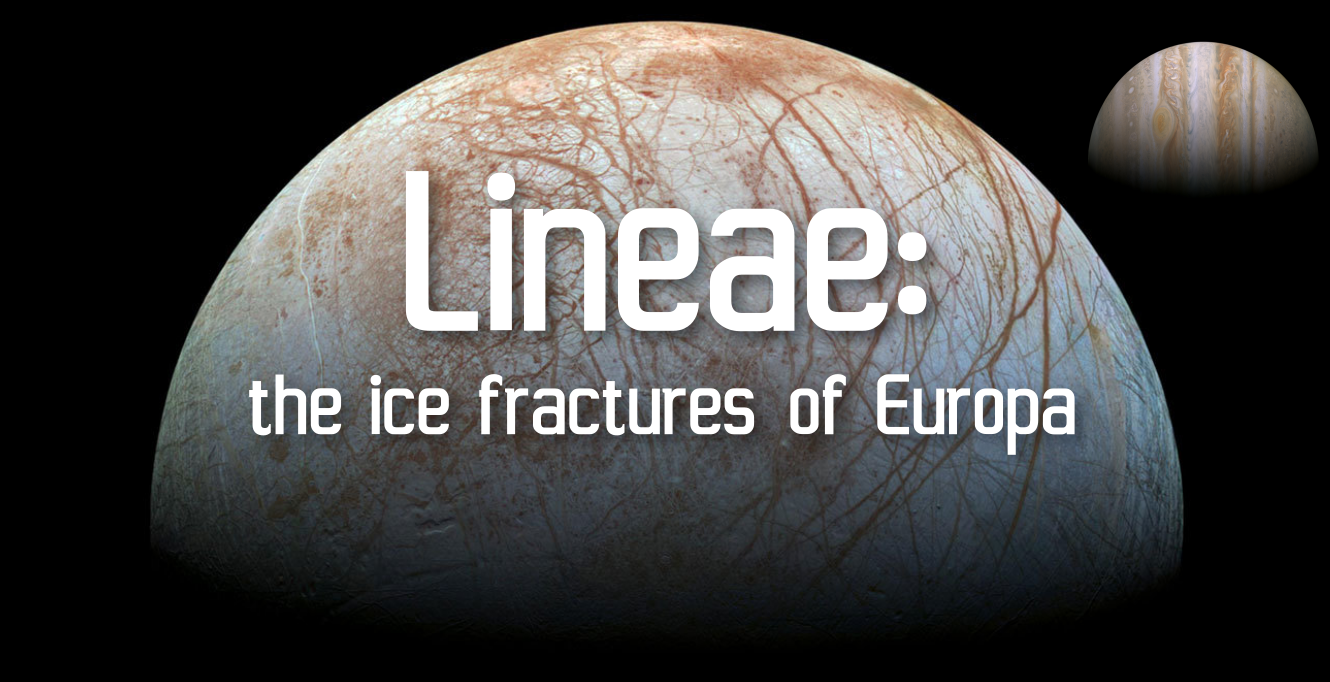
In Lineae, we used this mechanic to control the movement of each player’s vessel across the surface of the water (through a crack in Europa’s icy crust), but added submersible vehicles below the water that had to collect minerals and dock with their vessel on the surface to unload them. Toggling the locks does double duty: it routes the surface vessel, but it also changes the water level in each segment — which can shrink the distance a submersible has to swim down to reach a mineral deposit on the seabed, or lift it up so it can dock with the surface vessel above. To make the lock mechanic intuitive we used laser-cut pieces that flowed across the surface and filled in gaps in the water. We got consistent feedback that the lock mechanic was the most novel and interesting part of this game and encouraged us to make it play a more prominent role.
Keyboard Engine
An engine builder where the engine is a keyboard — each letter is a slot you stock with victory points.
This is an engine builder where your keyboard is the engine. You have an initial pool of 27 victory-point tokens — some positive, some negative — to distribute across the 26 letters and the return key. Every token-on-a-key is a productive slot that fires whenever a word is typed using that letter. You can split any token N into two (N−1) tokens, or merge two N-tokens into one (N+1), letting you concentrate or distribute victory points across slots; but every gain in one slot must come from a reduction elsewhere — the total reward is fixed, only its shape is yours to choose. The trick is to load high-value tokens onto common letters (E, T, A) and dump the negatives onto rare ones (X, Q, Z).
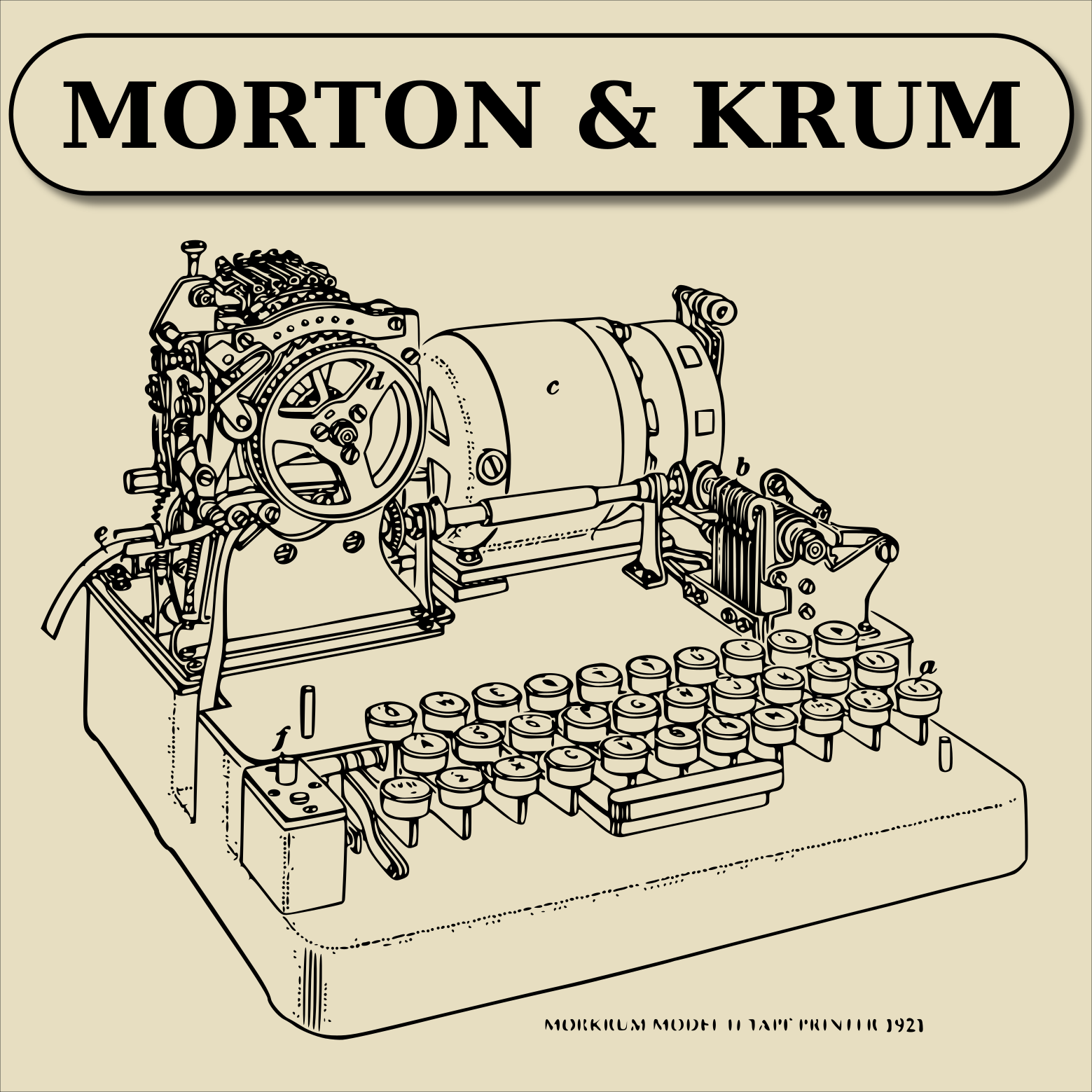
The computer science concept of variable-length-encoding powers the engine of this game. It’s the same algorithm used to design Morse Code. The deeper game emerges when players also compete for the right to choose which words get typed: if you know an upcoming word uses rare letters, you can spike those slots in advance and pull ahead — or punish an opponent who got greedy with common ones. In Morton and Krum, this engine drives a Mad Libs-style auction where the first players to each station pick the words everyone will spell.